Quick Answer: Best Time to Visit Manas National Park
The overall optimal window to visit Manas National Park is during the dry season (November to April (Safaris and Manas River rafting open; pleasant Himalayan foothill climate; park strictly closed May to October)), providing clear skies, comfortable daytime temperatures, and prime conditions for sightseeing, safaris, and outdoor exploration. For lush greenery and thunderous waterfalls, visit during the monsoon shoulder months (June to September).
Manas National Park Month-by-Month Decision Matrix
Compare climate averages, rainfall statistics, crowd levels, and primary attractions for every month.
| Month | Avg Temp | Rainfall | Crowds | Primary Highlight | Details |
|---|---|---|---|---|---|
| January | 15°C | 10mm | Peak | Golden Langur & River Rafting | Guide |
| February | 18°C | 18mm | High | Pygmy Hog & Grassland Safari in Bhuyanpara | Guide |
| March | 23°C | 60mm | Moderate | Bengal Florican Courtship & Red Cotton Blooms | Guide |
| April | 25°C | 140mm | Moderate | Bodo Baishagu Festival & Late Safaris | Guide |
| May | 27°C | 280mm | Closed | Park Strictly Closed | Guide |
| June | 28°C | 390mm | Closed | Park Strictly Closed | Guide |
| July | 29°C | 460mm | Closed | Park Strictly Closed | Guide |
| August | 29°C | 380mm | Closed | Park Strictly Closed | Guide |
| September | 28°C | 260mm | Closed | Park Strictly Closed | Guide |
| October | 25°C | 110mm | Low | Pre-Season Preview & Community Tourism | Guide |
| November | 20°C | 18mm | Peak | Full Safari Season & Manas River Rafting | Guide |
| December | 16°C | 10mm | Peak | Crisp Weather & Big Mammal Tracking | Guide |
Climate & Precipitation Trends in Manas National Park
Toggle temperature and rainfall curves to evaluate seasonal climate shifts.
Historical Averages
Plan your perfect trip by exploring typical temperature and rainfall trends throughout the year.
The Seasons of Manas National Park
Find your ideal travel season based on your personal travel priorities.
Winter (Nov - Feb)
8C - 23C • Dry (10mm - 20mm/month)
Invigorating foothill climate with crisp sunny days and panoramic views of the blue Bhutan Himalayan peaks. Core safari ranges (Bansbari, Bhuyanpara, Panbari) open fully for jeep safaris, and crystal-clear river rafting down the Manas River begins.
Golden Langur, Manas River Rafting, Pygmy Hog, Wild Water Buffalo, Clear Vistas
Spring (Mar - Apr)
15C - 30C • Moderate (60mm - 140mm/month)
Warm, pleasant, and ecologically vibrant. Crimson Bombax (silk cotton) trees bloom across the vast savanna, Golden Langurs actively forage along forest canopies, and critically endangered Bengal Floricans perform territorial courtship displays.
Bengal Florican Displays, Flowering Canopies, Tiger Tracking, Bodo Baishagu
Monsoon Closure (May - Oct)
23C - 33C • Extreme (280mm - 460mm/month)
The park is strictly closed to tourists. Torrential monsoon downpours cascade from the Bhutan highlands, causing the Manas and Beki rivers to swell rapidly. Forest tracks become impassable, allowing wildlife breeding to proceed undisturbed.
Park Strictly Closed for Monsoonal Wildlife Conservation
Key Activity Operating Windows
Verified operational schedules for safaris, river boating, cave exploration, and mountain pass transits.
Full open-jeep safaris across all three core ranges. Strictly closed May 1 to October 31 due to monsoon floods and conservation protocol.
35-km gentle river float down the crystal-clear Manas River along the Indo-Bhutan international border, offering prime water-level wildlife viewing.
Prime window for spotting critically endangered male Bengal Floricans performing territorial jumping courtship displays over low-cropped savanna.
High-probability sightings of the rare Golden Langur (Trachypithecus geei) in the mixed deciduous and semi-evergreen forest canopies.
Detailed Month-by-Month Guide for Manas National Park
Comprehensive climate notes, festival calendars, packing checklists, and local insider warnings.
January 15°C 10mm Golden Langur & River Rafting
What to Expect in Manas National Park in January
January is the peak month for exploring Manas. Drift down the sparkling Manas River from Mathanguri to Bansbari on an inflatable raft, spot Golden Langurs in the canopy, and enjoy views of the Bhutan Himalayas.
Festivals & Key Events
- Magh Bihu in Surrounding Bodo Villages
- Manas Winter Eco Festival
Recommended Packing Essentials
- Warm fleece jacket
- Thermal innerwear for open jeeps
- Waterproof shoes for rafting
- Telephoto lens
February 18°C 18mm Pygmy Hog & Grassland Safari in Bhuyanpara
What to Expect in Manas National Park in February
February brings dry trails and pleasant weather. The eastern Bhuyanpara range offers unmatched sightings of Greater One-horned Rhinos, Wild Water Buffalos, and rare Pygmy Hogs.
Festivals & Key Events
- Bodo Tribal Handloom & Craft Shows
Recommended Packing Essentials
- Light woolens for morning
- Cotton safari wear for afternoon
- Safari hat
- UV sunglasses
March 23°C 60mm Bengal Florican Courtship & Red Cotton Blooms
What to Expect in Manas National Park in March
March is the golden window for ornithologists. Male Bengal Floricans perform spectacular aerial leaps over the burnt grasslands to attract mates amidst blooming red Bombax trees.
Festivals & Key Events
- Spring Flowerings & Wilderness Walks
Recommended Packing Essentials
- Breathable safari shirts
- High-power binoculars (10x42)
- Sunscreen
- Hydration pack
April 25°C 140mm Bodo Baishagu Festival & Late Safaris
What to Expect in Manas National Park in April
Pre-monsoon showers bring lush green foliage. Surrounding Bodo villages celebrate Baishagu with traditional Kham and Siphung flute music, marking the Assamese New Year.
Festivals & Key Events
- Bodo Baishagu Festival (Mid-April)
Recommended Packing Essentials
- Light rain jacket
- Quick-dry safari trousers
- Insect repellent
- Walking shoes
May 27°C 280mm Park Strictly Closed
What to Expect in Manas National Park in May
Manas closes its gates for all safaris and river rafting. Heavy pre-monsoon deluges swell the Manas River and make forest tracks impassable.
Festivals & Key Events
- None (Park Closed)
Recommended Packing Essentials
- Not applicable - park closed
June 28°C 390mm Park Strictly Closed
What to Expect in Manas National Park in June
Monsoon downpours engulf the foothills. Rivers roar with mountain runoff from Bhutan, and forest guards conduct armed foot and boat patrols.
Festivals & Key Events
- None (Park Closed)
Recommended Packing Essentials
- Not applicable
July 29°C 460mm Park Strictly Closed
What to Expect in Manas National Park in July
July is the wettest month in the Manas biosphere. High water levels ensure essential ecological replenishment for the alluvial grasslands.
Festivals & Key Events
- None (Park Closed)
Recommended Packing Essentials
- Not applicable
August 29°C 380mm Park Strictly Closed
What to Expect in Manas National Park in August
Heavy monsoon rains continue. Forest staff monitor animal corridors and maintain perimeter security.
Festivals & Key Events
- None (Park Closed)
Recommended Packing Essentials
- Not applicable
September 28°C 260mm Park Strictly Closed
What to Expect in Manas National Park in September
Rainfall declines toward late September. Forest department engineers begin road grading and wooden bridge reconstructions across forest streams.
Festivals & Key Events
- None (Park Closed)
Recommended Packing Essentials
- Not applicable
October 25°C 110mm Pre-Season Preview & Community Tourism
What to Expect in Manas National Park in October
Skies clear completely and the Manas River turns crystalline blue. Early preview jeep safaris in Bansbari may open by late October.
Festivals & Key Events
- Kati Bihu in Border Villages
Recommended Packing Essentials
- Light cottons
- Light sweater for night
- Binoculars
- Camera
November 20°C 18mm Full Safari Season & Manas River Rafting
What to Expect in Manas National Park in November
November marks the grand opening of all ranges (Bansbari, Bhuyanpara, Panbari). River rafting launches, and herds of wild elephants roam the alluvial plains.
Festivals & Key Events
- Manas Tourism Inauguration Gatherings
Recommended Packing Essentials
- Warm fleece
- Windproof jacket
- Safari clothing (neutral shades)
- Telephoto lens
December 16°C 10mm Crisp Weather & Big Mammal Tracking
What to Expect in Manas National Park in December
December offers cold, crisp mountain air and radiant sunshine. Perfect conditions for multi-day wildlife tracking, Bodo community homestays, and night campfires.
Festivals & Key Events
- Winter Holiday Wildlife Expeditions
Recommended Packing Essentials
- Heavy warm fleece or down jacket
- Thermal innerwear
- Beanie and gloves for morning safaris
The Comprehensive Guide to Manas National Park
Nestled against the gentle foothills of the Bhutan Himalayas in western Assam, Manas National Park is a UNESCO World Heritage Site, Project Tiger Reserve, Biosphere Reserve, and Elephant Reserve. Contiguous with Royal Manas National Park in Bhutan, this protected wilderness harbors iconic and critically endangered species found nowhere else on earth.
Safari Ranges & The Winter Season (November to April)
Manas operates across three distinct administrative ranges, all of which are open exclusively from November 1 to April 30:
- Bansbari (Central Range): The primary tourism hub leading to the historic Mathanguri forest lodge on the Bhutan border. Famous for dense elephant herds, Golden Langurs in the sub-Himalayan canopy, and river rafting.
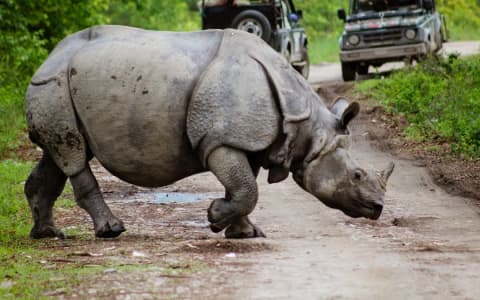
- Bhuyanpara (Eastern Range): Dominated by expansive alluvial grasslands and wetlands, this range offers the highest density of Greater One-horned Rhinoceroses, Wild Water Buffaloes, and the world's premier habitat for the critically endangered Bengal Florican and Pygmy Hog.
- Panbari (Western Range): Dense semi-evergreen forest adjoining the foothills, exceptionally rich in birdlife, Hornbills, and Capped Langurs.
Unique River Rafting on the Manas River
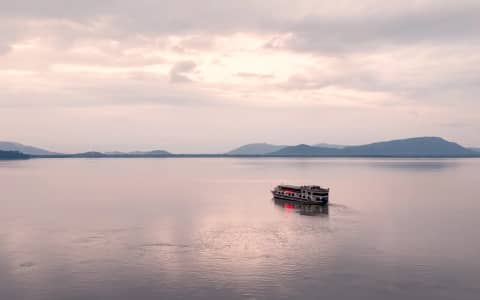
Unlike most Indian tiger reserves where activities are confined strictly to jeep tracks, Manas offers gentle, scenic inflatable boat rafting on the crystal-clear Manas River. Starting from the inspection bungalow at Mathanguri, the 3-hour float drifts silently along the international border between India and Bhutan, providing unique water-level vantage points of elephants, deer, and riverine birds like the rare Ibisbill and Mergansers.
Monsoon Closure & Conservation (May to October)
From May through October, massive runoff from the Bhutan Himalayas rushes through the Manas, Beki, and Hakua river channels, submerging low-lying tracks and turning forest roads into impassable mud. The park strictly closes to ensure animal breeding safety and prevent disruption to wildlife nurseries.
Frequently Asked Questions
What is the best time to visit Manas National Park?
The best time to visit Manas National Park is between November and April, when the weather is pleasant and dry, all three safari ranges are fully open, and river rafting operations on the Manas River are active.
What rare and endemic animals can be seen in Manas?
Manas is home to several rare and endemic species including the Golden Langur, Pygmy Hog (world's smallest wild pig), Hispid Hare, Bengal Florican, Greater One-horned Rhinoceros, Clouded Leopard, and Wild Water Buffalo.
Is river rafting allowed in Manas National Park?
Yes, gentle scenic river rafting on inflatable boats is operated from Mathanguri down to Bansbari along the Manas River between November and April, organized through certified local eco-tourism societies.
How far is Manas National Park from Guwahati?
Manas National Park (Bansbari Gate) is approximately 140 km from Guwahati, taking about 3.5 to 4 hours by road via NH27 through Barpeta Road.
When is the best time to see the endangered Bengal Florican in Manas?
The best time to spot the rare Bengal Florican is from mid-February to mid-April in the open grasslands of the Bhuyanpara range, when males perform courtship jumping displays over the low grass.