
Elephant Safari in Central Range
"Track wild rhinos silently at sunrise from the Mihimukh riding tower."
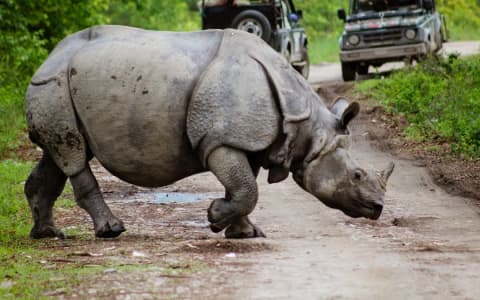
Elephant Safari in the Central Range (Kohora Range) is a classic morning wildlife tracking experience starting from the Mihimukh Riding Tower in Kohora, Golaghat District, Assam, at 65 meters elevation. It provides a silent, misty journey through towering elephant grass and along riverine channels, perfect for observing waking greater one-horned rhinoceroses.
The Wetland Ecosystem of Kohora
The Central Range, accessed via the Kohora gate, represents the ecological core of Kaziranga. Unlike the flatter grasslands of the Western Range (Bagori), Kohora is a complex network of dense tropical broadleaf forests, extensive flooded grasslands, and vital perennial wetlands locally known as beels (such as Kathpora and Daphlang).
Riding a trained camp elephant here is the only way to navigate these marshy verges and the Diphlu River banks. The elephants move with near-absolute silence, allowing you to venture deep into the ten-foot-tall Saccharum ravennae (elephant grass) where rhinos and wild buffaloes feed at dawn, completely hidden from jeep tracks.
Diverse Wildlife and Birding
Because the Kohora Range features abundant water bodies, it attracts a diverse range of species. It is common to encounter herds of the rare Eastern swamp deer (Cervus duvaucelii ranjitsinhi) wading through the shallows. The wetlands are also a haven for birdlife. During the ride, you can spot nesting storks, egrets, and the majestic Pallas's fish eagle soaring above the water.
This range has been at the forefront of Kaziranga's conservation success story. The camp elephants used for the safari are originally trained for forest patrolling and anti-poaching operations by the Assam Forest Department, making their presence naturalized and non-threatening to the wild inhabitants.
What NOT to Expect
Do not expect a late-morning or afternoon ride; safaris are strictly conducted at dawn to align with peak animal activity. The ride is not smooth; you will be sitting on a basic wooden howdah that sways significantly as the elephant navigates mud banks and ditches. Do not expect to stay dry in early November, as splashing from wet grass and marshy crossings is common.
When Is the Best Time to Visit Kohora?
- Winter (November to February): Ideal for misty, highly atmospheric mornings. The weather is cool (8°C to 22°C) and migratory birds are highly active.
- Summer (March to May): Phenomenal visibility as the tall grass dries and shrinks. Wildlife gathers around the remaining beels.
- Monsoon (June to October): PARK CLOSED. Flooding by the Brahmaputra River forces wildlife to migrate to the Karbi Anglong hills.
Photography Guide
- Mihimukh Tower Silhouette: Arrive 20 minutes early to photograph the elephants' silhouettes emerging from the morning fog against the sunrise.
- Kathpora Beel Reflections: The wetlands offer excellent reflection shots of elephants and grazing rhinos in the soft morning light.
Insider Tips
- Use the concrete tower for boarding: Boarding from the Mihimukh concrete tower is much easier than mounting from ground level.
- Opt for the 5:30 AM slot: The first slot has the thickest mist and most magical morning light for photography.
- Layer in winter: The wind chill on a moving elephant at 5:00 AM is freezing, but it warms up quickly.
- Look for water birds: Keep an eye on the reeds for nesting storks and egrets, which often nest close to the path.

7-Day Tawang Tour Package from Guwahati: Dirang, Sangti & Shergaon
Mountains & Monpas: A Curated Himalayan Journey
Visitor & Booking Protocol
Permit & Entry Check
State permit / ILP verification required at highway checkpost before arrival.
Tickets & Cash Protocol
Entry desk is managed on-site. Carry small cash denominations (₹20, ₹50, ₹100) for entry and parking.
Certified Guide Desk
Authorized village community guides can be hired at the entry registration desk. Certified guide rates range between ₹800–₹1,500 depending on circuit and trail duration.
Timing & Departure Cutoff
Arrive during early morning hours (08:00–10:30 AM). Mountain trails, caves, and viewpoints generally stop inbound entry by 15:30 to ensure safe return before mountain dark.
Safety & Rules
- • Maintain absolute silence: Loud noise disturbs the mount and wild animals.
- • Do not carry large bags: Only pocket-sized bags and cameras are allowed on the elephant.
- • No bright colors: Muted earth tones (olive green, brown, khaki) only.
- • No flash photography: Flash is strictly prohibited as it can agitate wild animals.
Frequently Asked Questions
More Places to Visit in Kaziranga
Handpicked stops our drivers pass every week.
Jeep Safari in Western Range, Kaziranga
The ultimate destination for One-horned Rhino sightings.
67m ASL

Jeep Safari in Central Range, Kaziranga
Ride through the core marshy floodplains of the Kohora range.
65m ASL

Jeep Safari in Eastern Range, Kaziranga
Quiet woodlands and exceptional birding around Sohola Beel.
80m ASL

Jeep Safari in Burapahar Range, Kaziranga
Track Hoolock Gibbons and Capped Langurs through hilly broadleaf forests in Kaziranga's remote westernmost beat.
75m ASL

Elephant Safari in Western Range
Dawn patrol on elephant-back to track rhinos closely in Bagori.
67m ASL
Kaziranga National Orchid and Biodiversity Park
Explore Northeast India's largest orchidarium, 500+ wild species, rice seed museum, live Bihu dances, and Assamese heritage handlooms.
64m ASL
Best Time to Visit
Best time of day: 05:30 AM or 06:30 AM
Visitor Specs
Operates in three early morning shifts.
How to Reach
Altitude & Terrain
Alluvial Plains
7-Day Tawang Tour Package from Guwahati: Dirang, Sangti & Shergaon
Mountains & Monpas: A Curated Himalayan Journey
Location
Lng: 93.398600
Plan Your Trip to Kaziranga with Nezo
Combine Elephant Safari in Central Range with living tribal heritage, scenic mountain vistas, and handpicked local stays on a private guided journey.